6 hr 30 min
Stonehenge Morning Tour from London with Priority Entry
- Entry ticket
- Mobile voucher
- Valid same day
- Free cancellation
Stonehenge Half-Day Tours — Priority Entry from London
Three hours to the Salisbury Plains, four thousand years waiting in the stones
Compare fares, pick the fit — all bookings are mobile-voucher and eligible for free cancellation where shown.
6 hr 30 min
6 hr
8 hr
Selecting the right ticket for your stonehenge tour from london half day experience involves choosing between standard visitor access and the more exclusive Stone Circle Experience. Understanding these options helps you manage your time effectively while visiting this iconic UNESCO heritage landmark.
|
Top pick General Admission Public Viewing Path |
Stone Circle Experience Inner Circle Access | |
|---|---|---|
| Entry Timing | Timed entry 09:30–17:00 | Outside public hours |
| Access Level | Public path viewing | Walk among the stones |
| What's included | Exhibition and shuttle | Guided circle entry |
| Booking Method | Advance online recommended | Limited advance booking |
| Best for | First-timers and families | Deep history enthusiasts |
| See tickets & prices |
Verdict: Choose General Admission for a standard stonehenge tour from london half day, or book the Stone Circle Experience if you require exclusive access to the stones.
Worth it for time-pressed visitors seeking convenience
A stonehenge tour from london half day delivers efficient access to one of Britain's most significant prehistoric monuments without consuming an entire day. Most half-day excursions clock in around 5-6 hours total, combining motorway transport with 90 minutes at the ancient stone circle and visitor exhibition. The 32 GBP gate admission sits within the tour price alongside coach travel, meaning you avoid navigating Salisbury's rural roads or coordinating train connections. Priority entry options trim queue time during peak season. The neolithic sarsen stones and engineering mystery justify the investment for first-time visitors, though the viewing experience remains guided-path only—you circle the monument from a prescribed route rather than approaching the trilithons directly. Half-day Stonehenge tours from London work best for travelers prioritizing iconic landmarks over deep archaeological immersion, or those combining the site with Windsor Castle in extended itineraries. Independent gate visitors face identical viewing restrictions at the same 32 GBP baseline, making organized transport from central London a practical value-add rather than a markup.
Bottom line: Stonehenge tour from london half day tickets make sense when convenience trumps unstructured exploration time.
They complement each other, but most visitors who prioritize a short stonehenge tour from london half day find the ancient site more intriguing for its prehistoric mystery.
|
Top pick Stonehenge |
Windsor Castle | |
|---|---|---|
| Focus | Prehistoric archaeology and landscape | |
| Duration | 3–5 hours | |
| Setting | Outdoor open plains | |
| Intensity | Low (walking/shuttle) | |
| Booking | Timed entry essential | |
| Best for | Ancient history seekers | |
| See tickets & prices |
Verdict: Choose Stonehenge for a focused, time-efficient excursion into Neolithic history, or Windsor Castle if you prefer a royal experience that is equally accessible as a half-day trip.
Hand-picked experiences loved by thousands of travelers
11 hours
Free Cancellation
Discover two iconic English landmarks in one day with included admission and expert commentary
11 hours
Free Cancellation
Journey to England's ancient stone circle and Georgian spa city in one unforgettable day
11 hours
Free Cancellation
Journey to England's iconic prehistoric monument and explore the historic university city in one day
11 hours
Free Cancellation
Discover ancient mysteries, Georgian elegance, and storybook villages on this intimate full-day escape
3 hours 30 minutes
Free Cancellation
Discover royal palaces, historic monuments, and hidden streets on a guided 3.5-hour walk through the heart of London
7 hours
Free Cancellation
Seven-hour private journey to England's most enigmatic monument with dedicated vehicle and driver
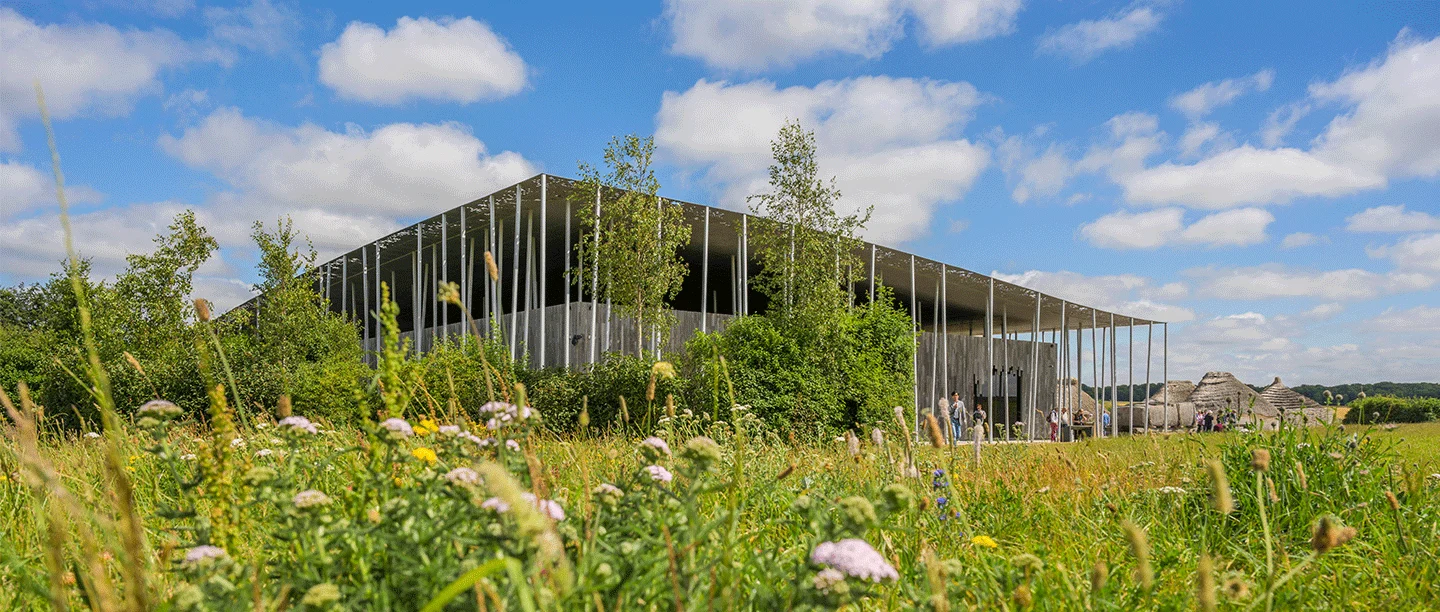
Explore the Neolithic artifacts and exhibition
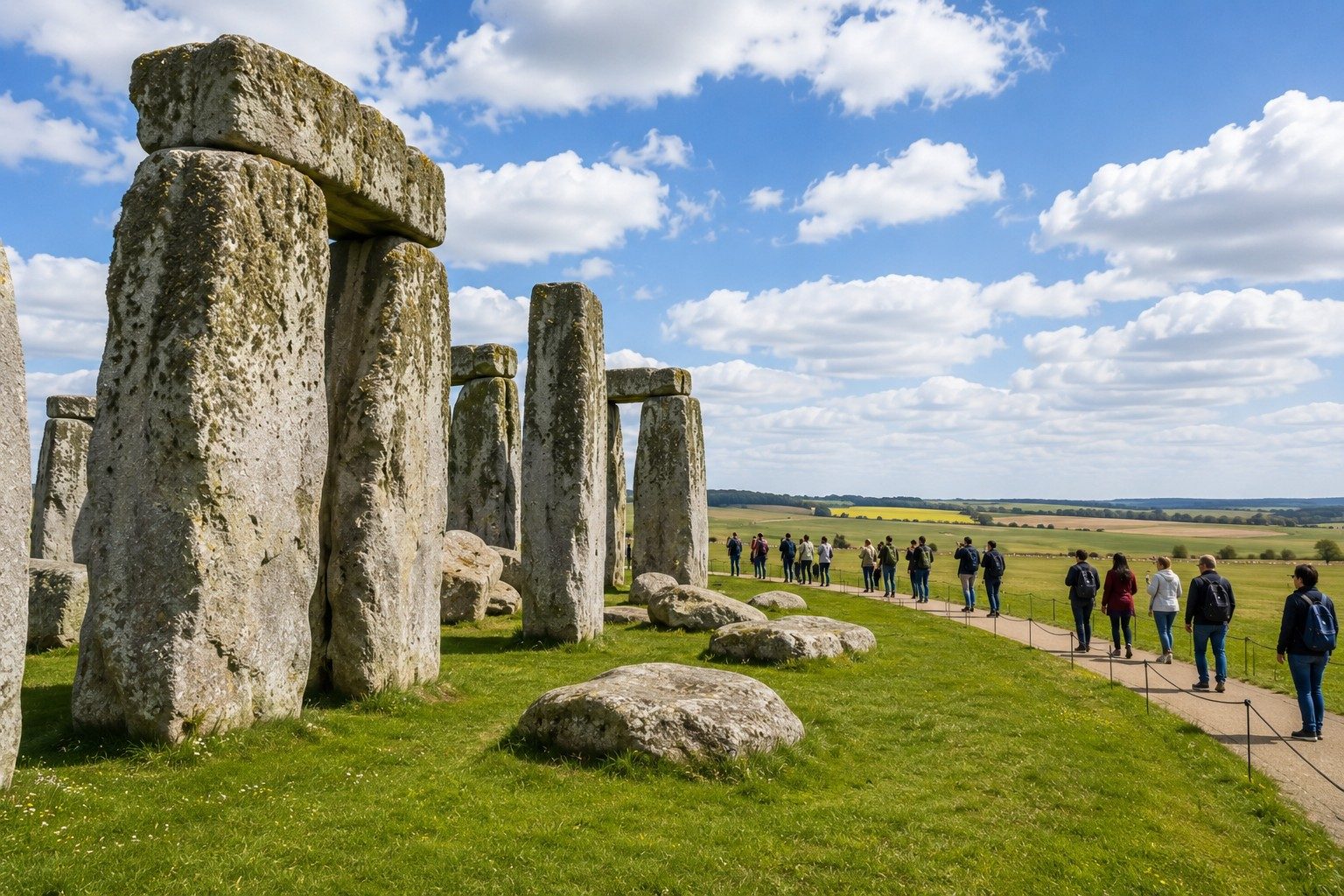
Follow the path from the centre toward the stones
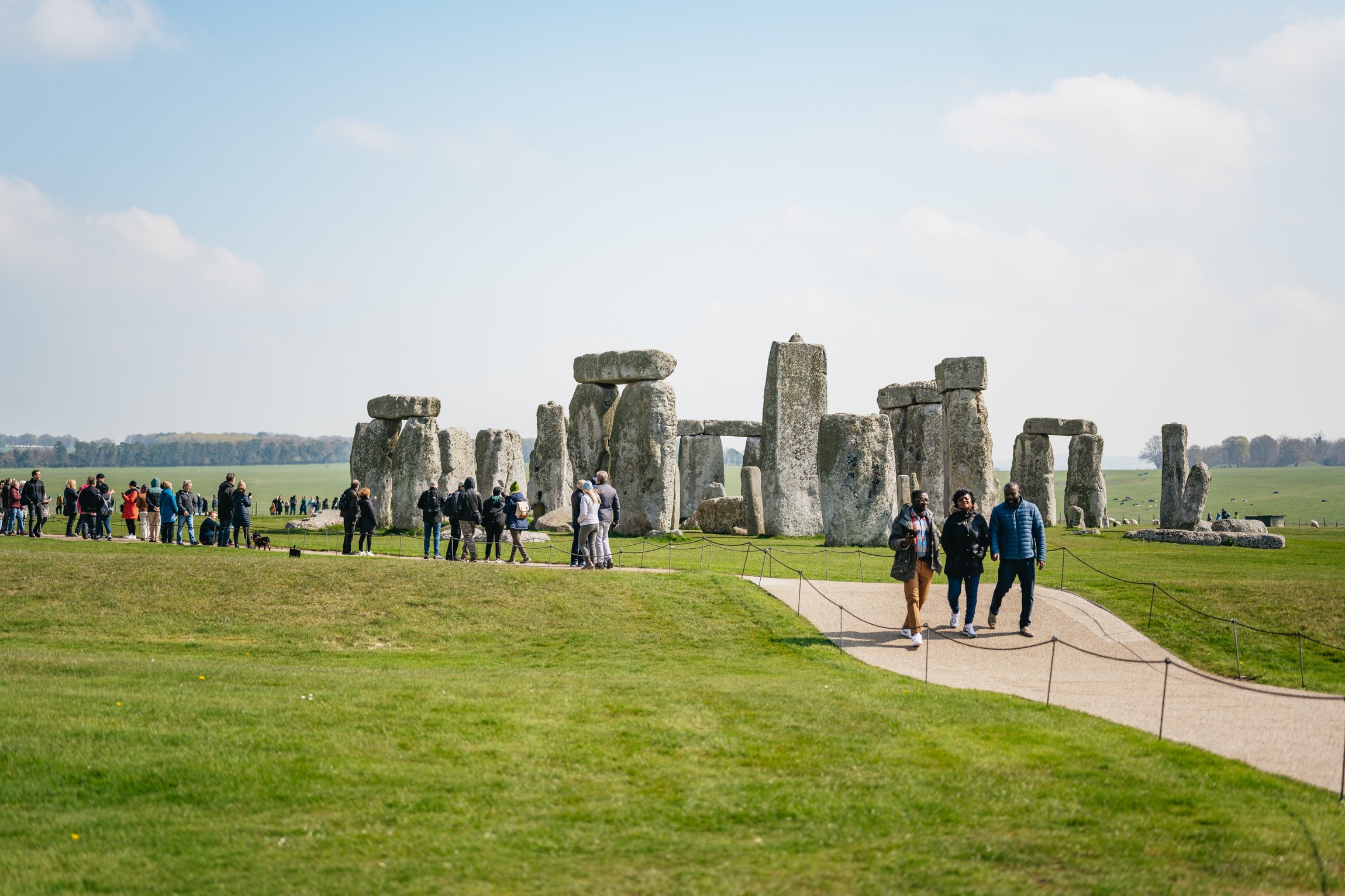
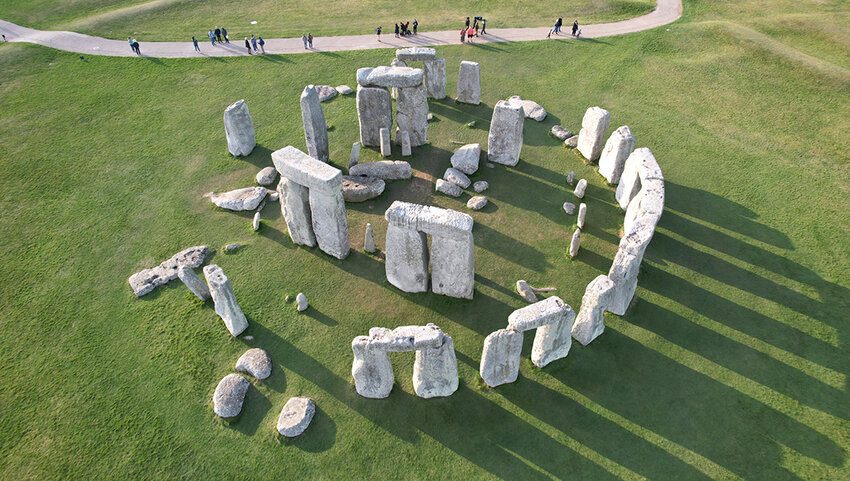
Walk the loop around the monument
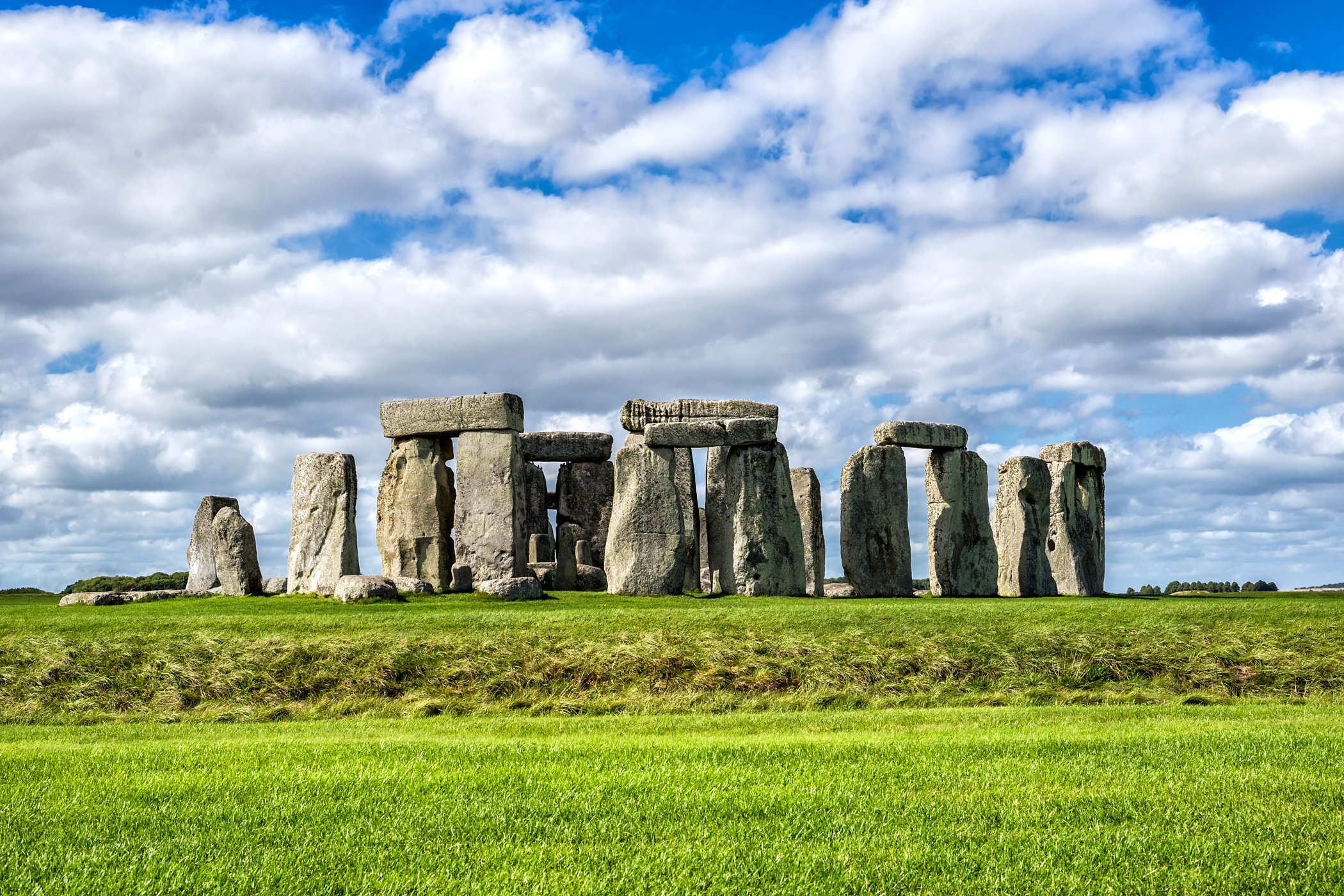
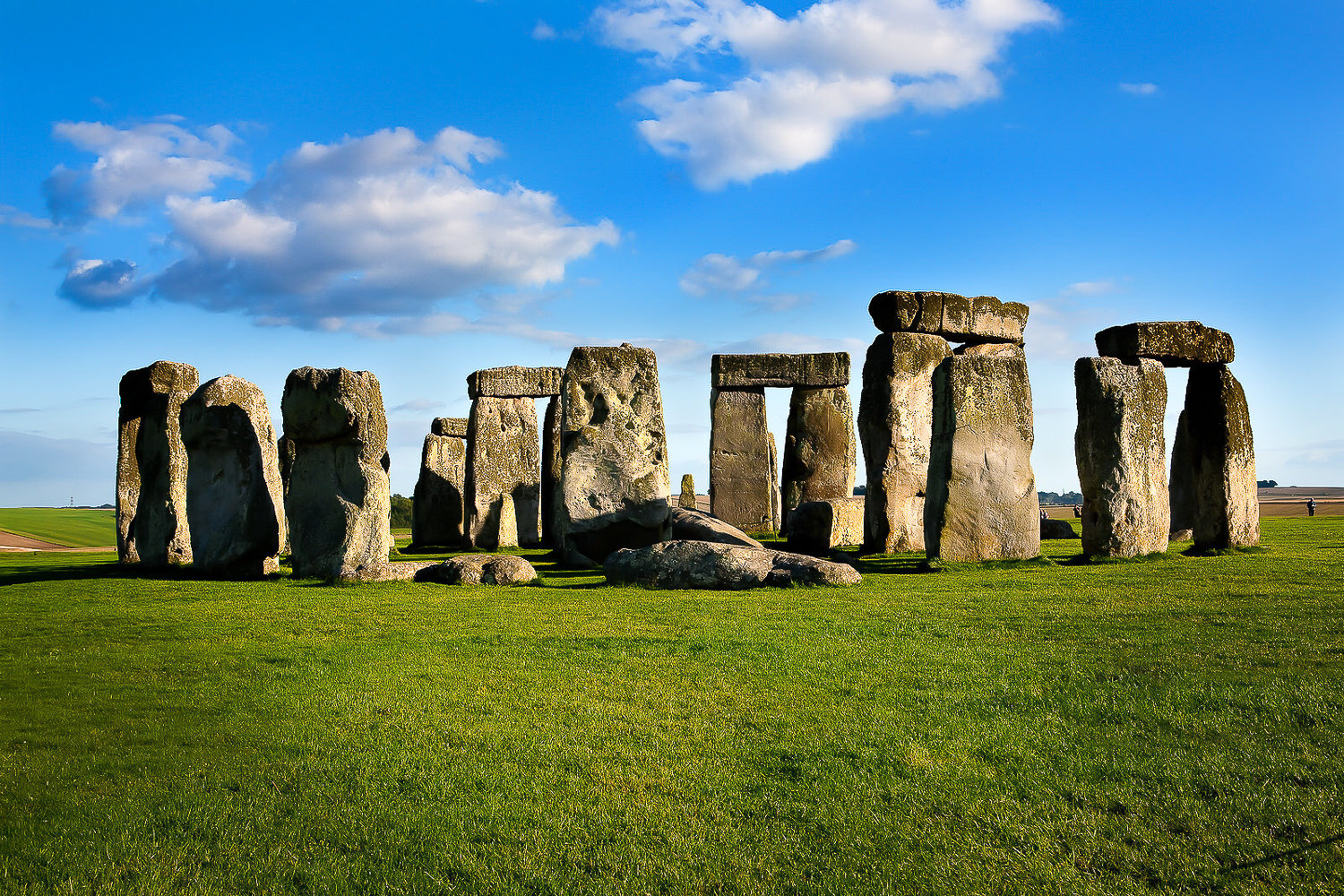
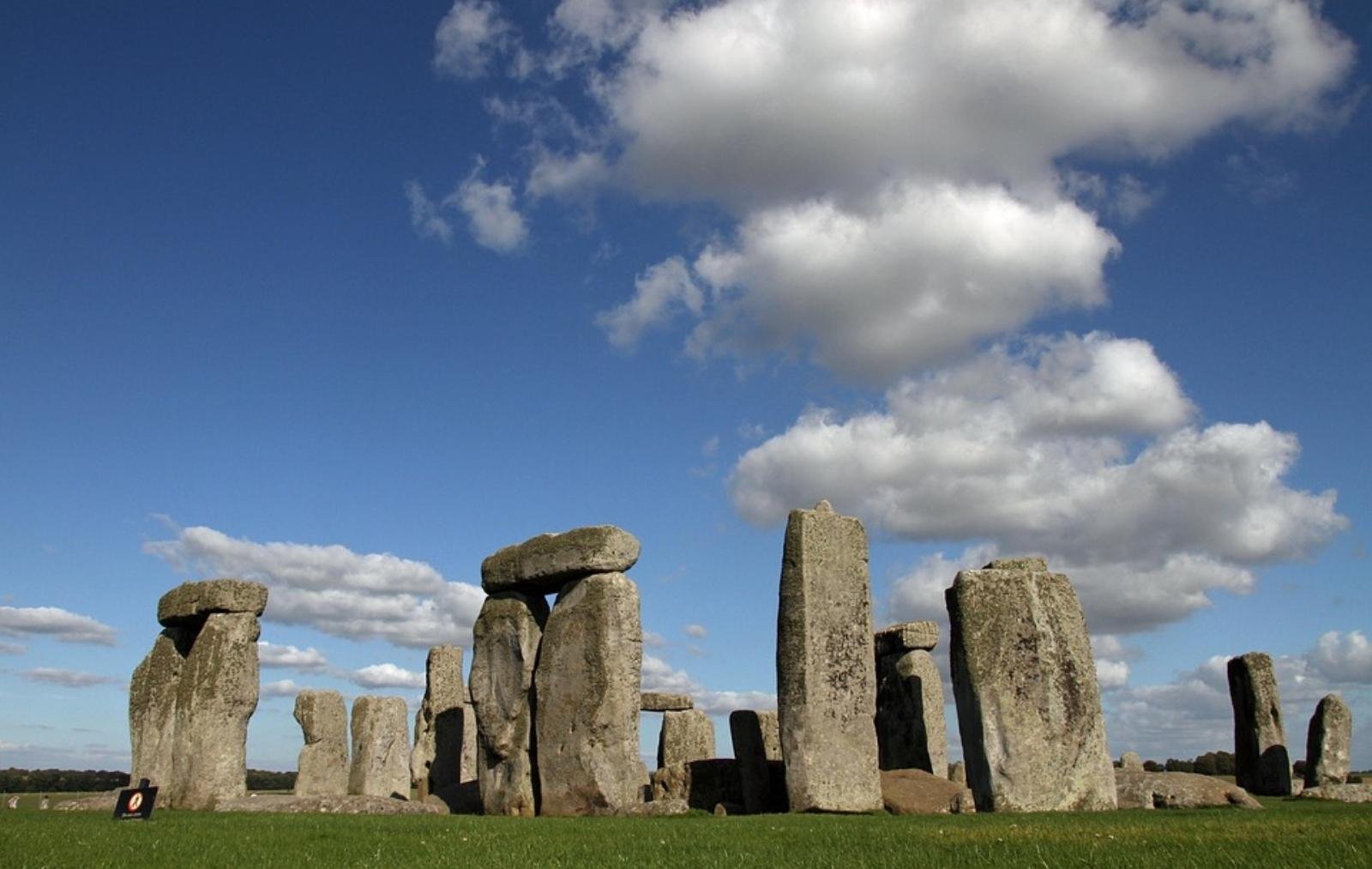
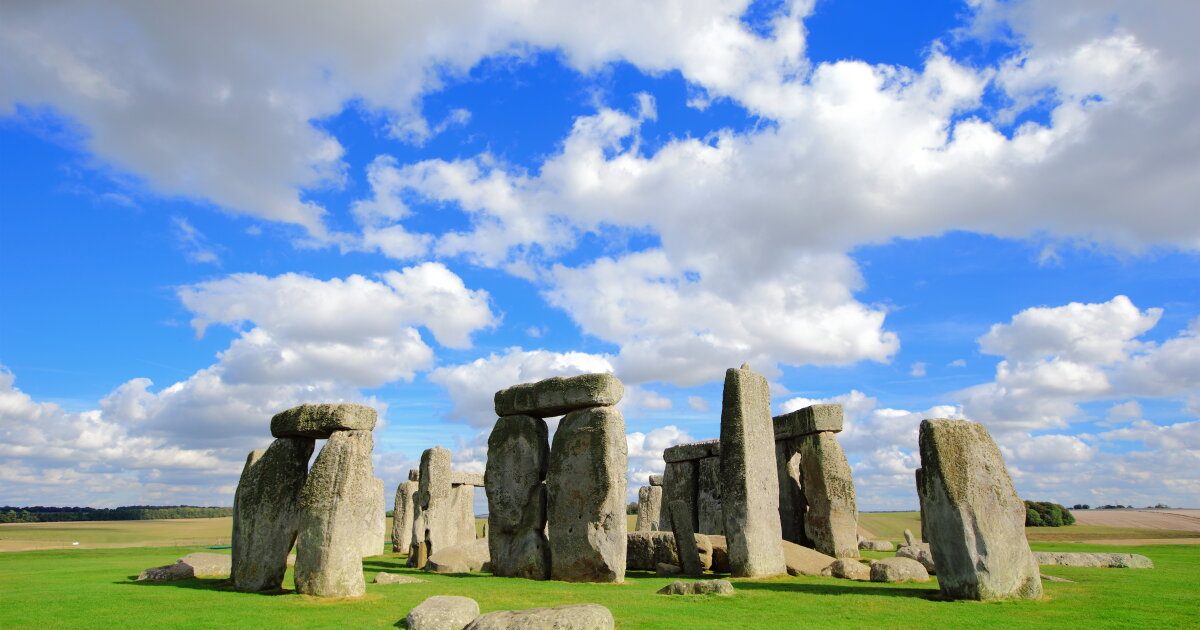
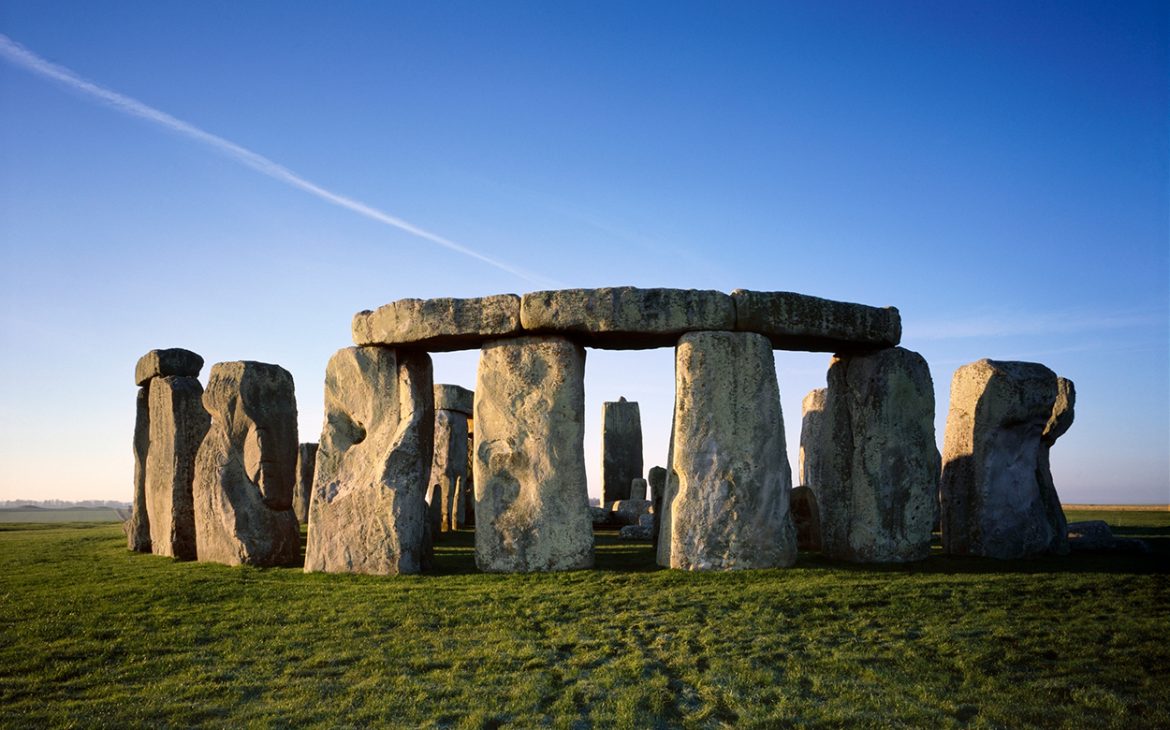
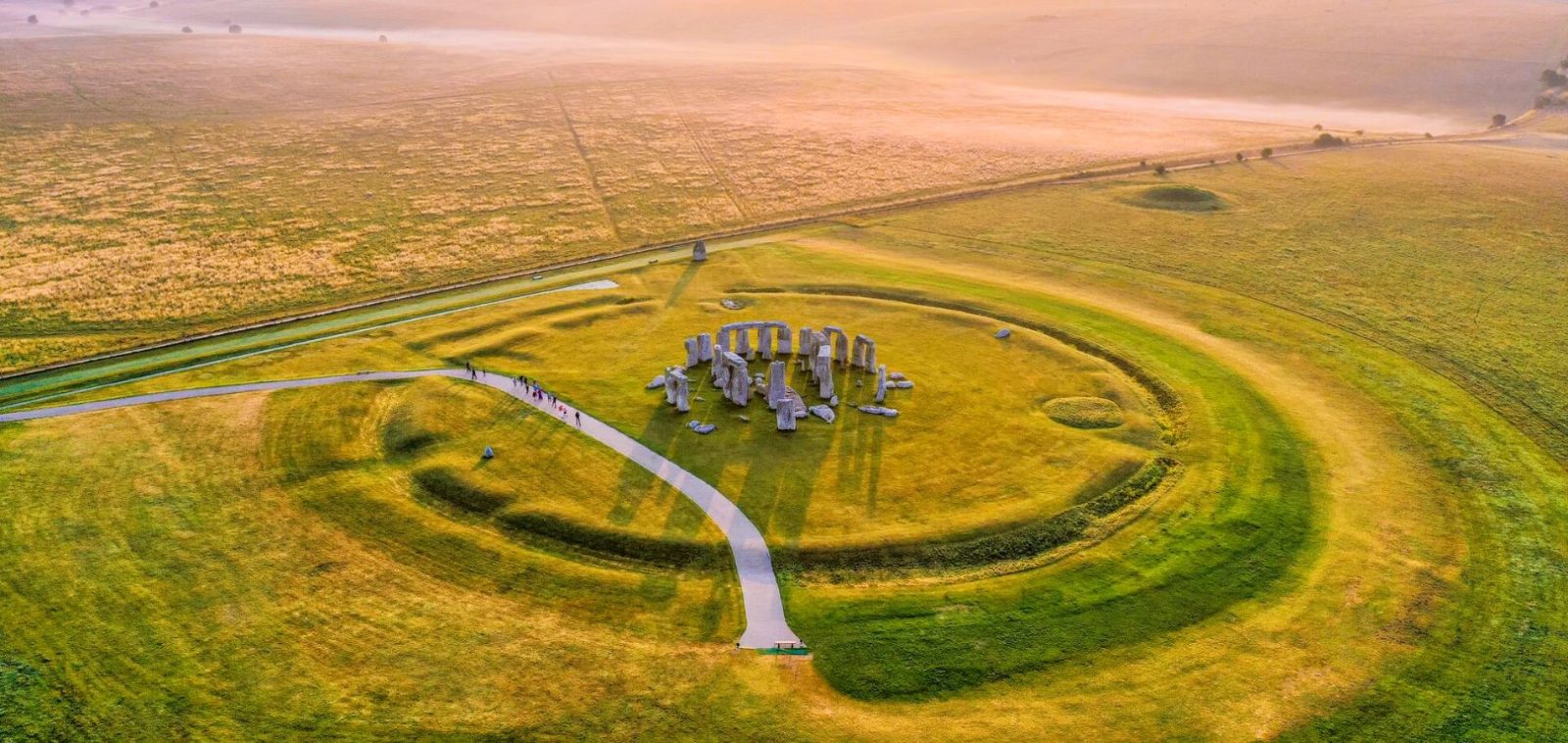
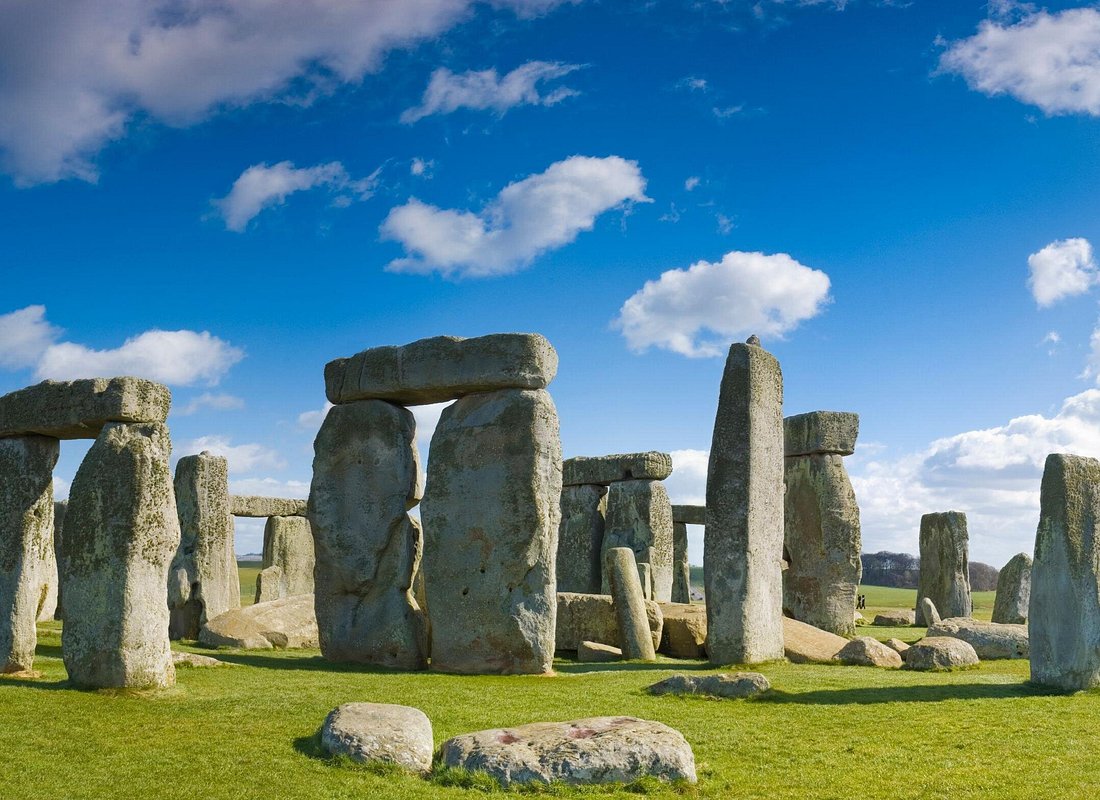
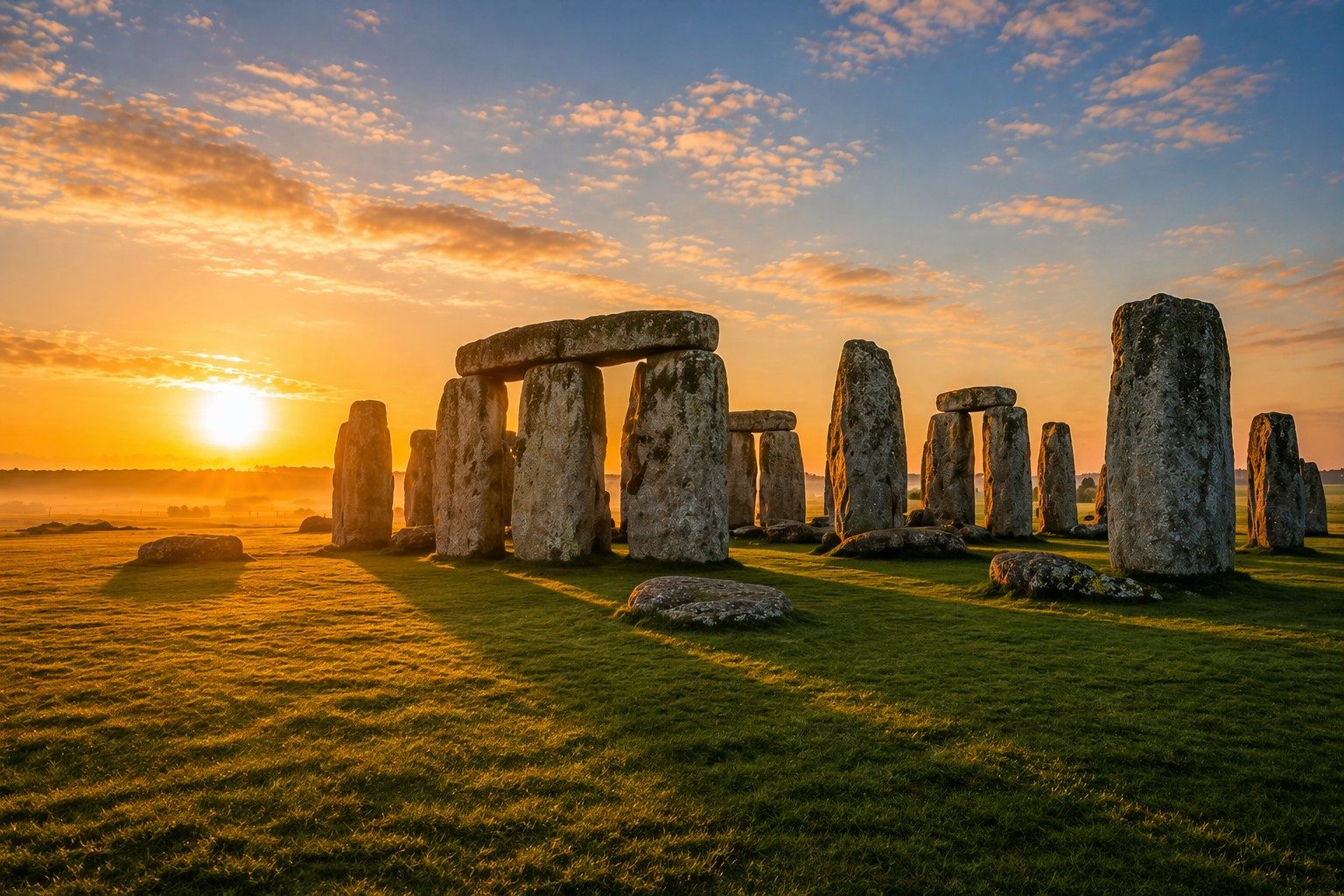
The iconic prehistoric monument consisting of massive sarsen stones and smaller bluestones. It is 5,000 years old.
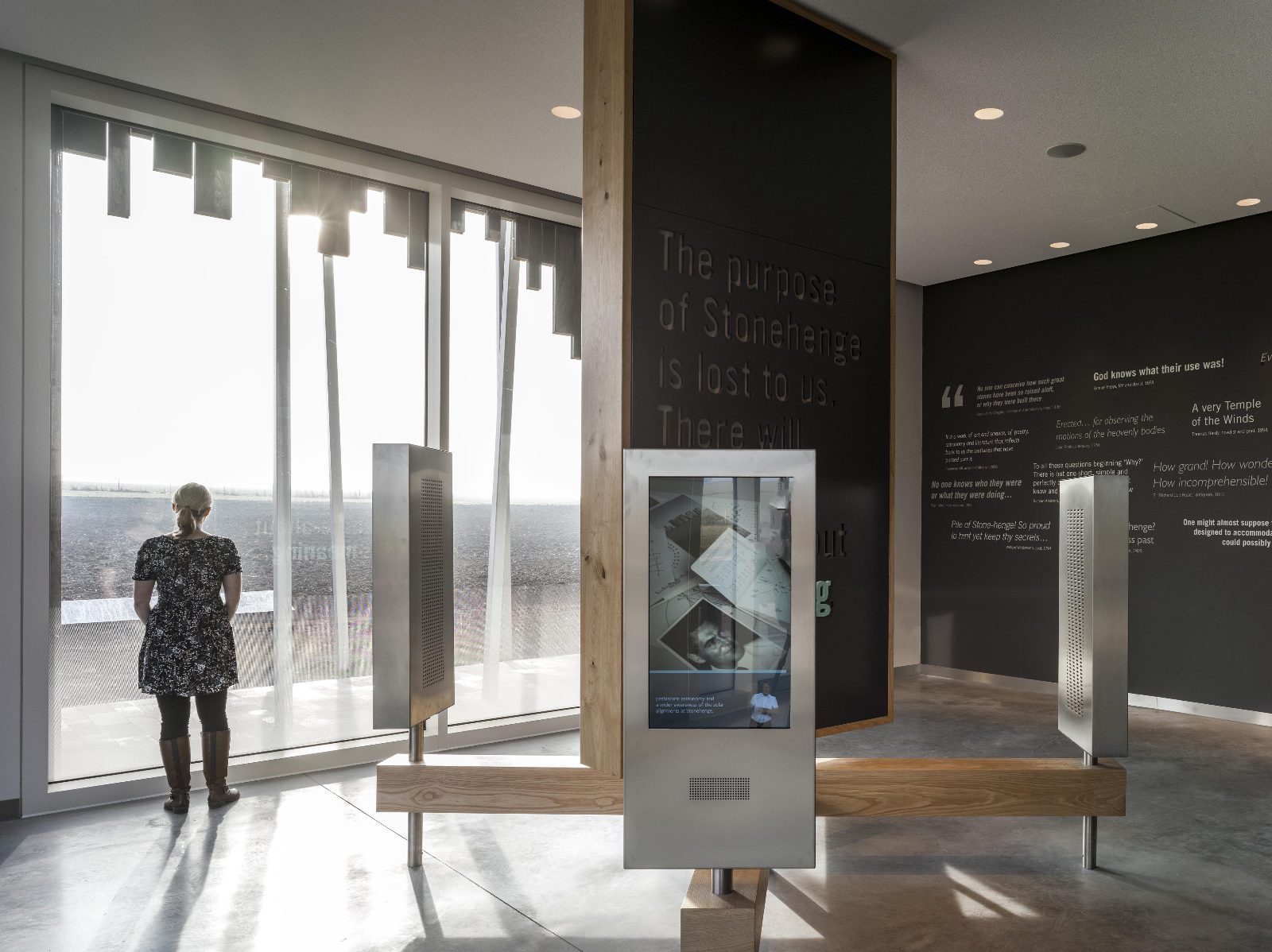
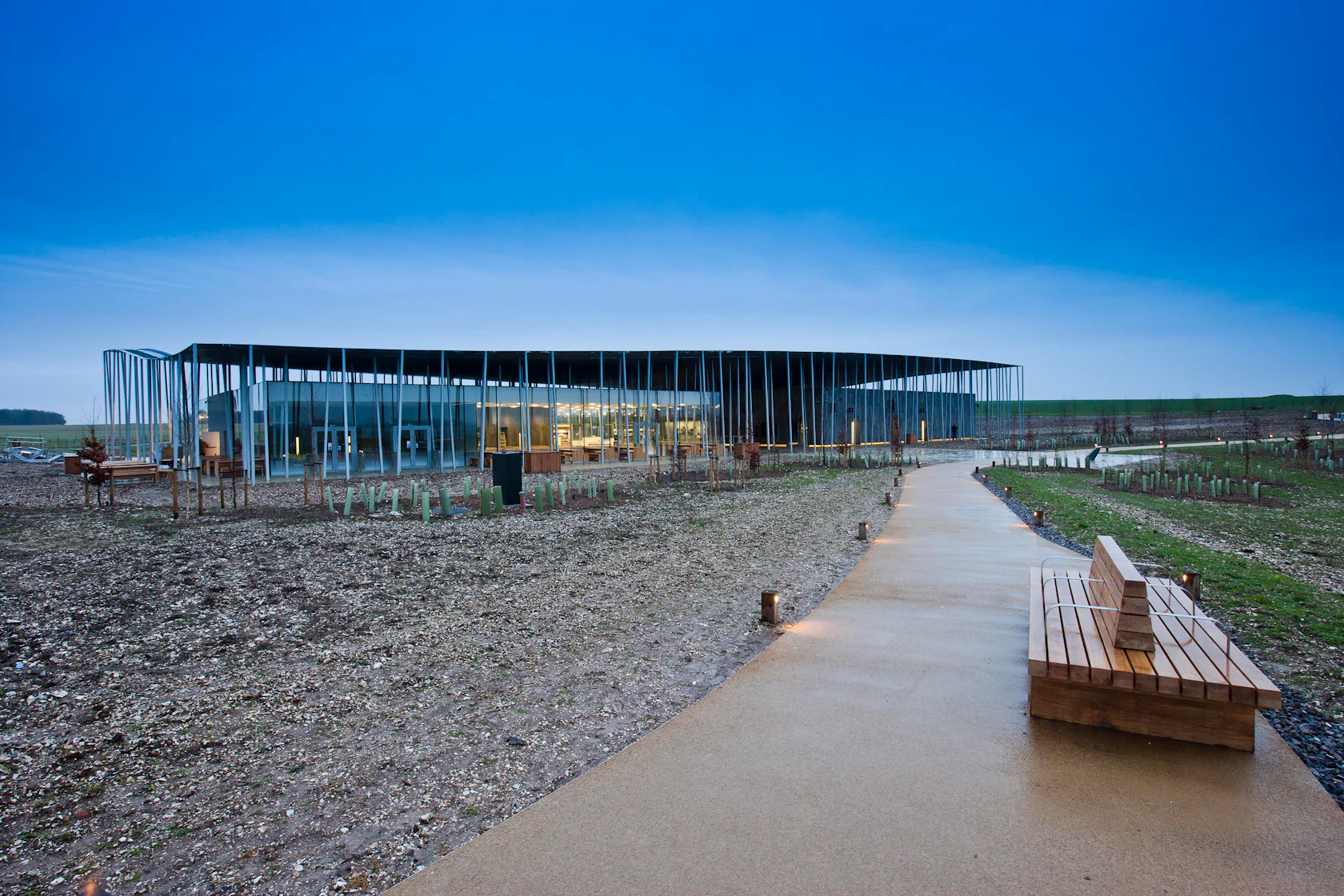
A high-tech museum featuring over 250 archaeological artifacts and a 360-degree immersive virtual experience.
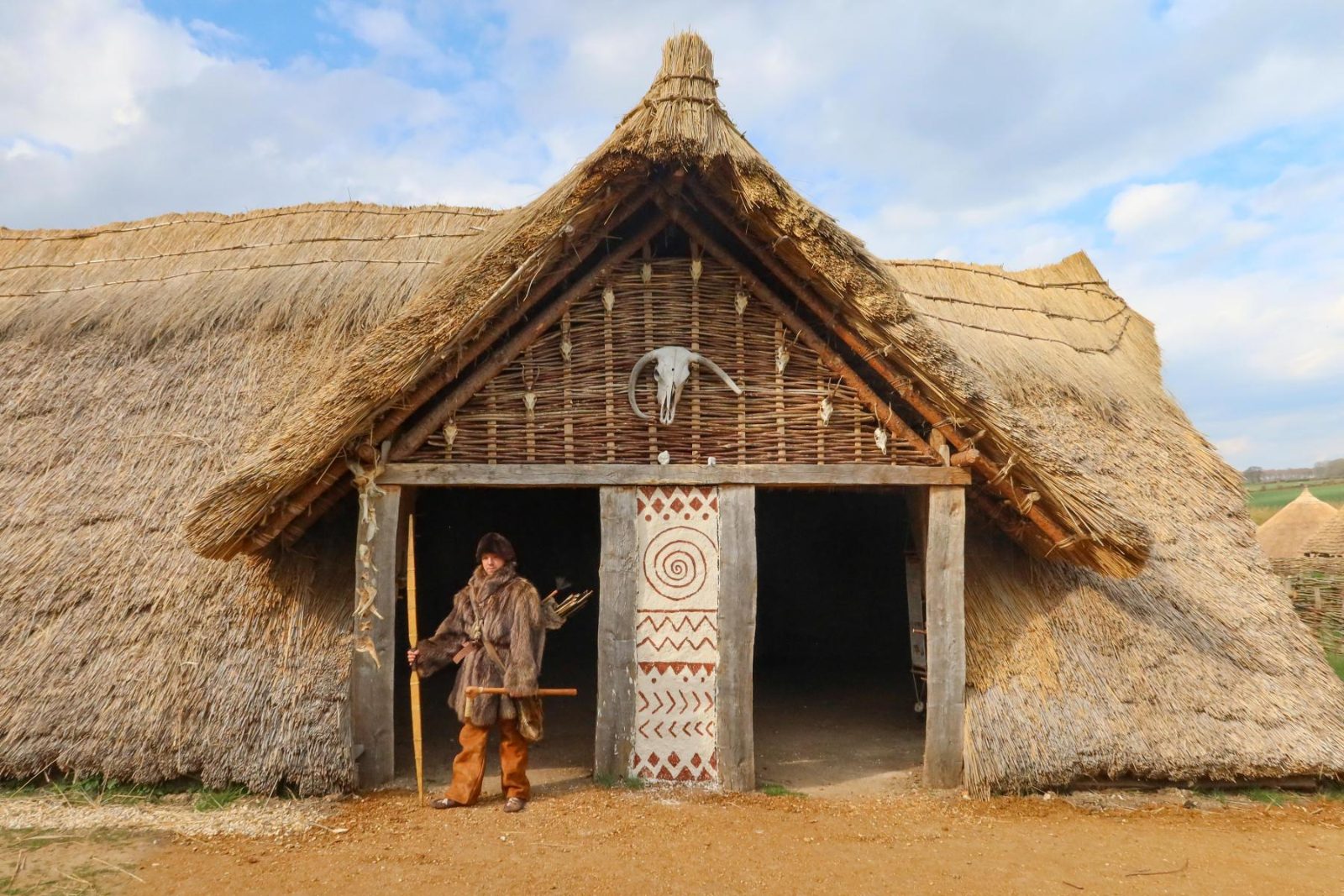
Reconstructed dwellings that show how builders of the monument lived. These are based on excavations nearby.
A walking path through the World Heritage Site that provides sweeping views of the surrounding plains and barrows.
You board the coach in central London before sunrise, the city still half-lit, and settle in for the two-hour drive southwest through the M3 corridor. The landscape flattens as you cross into Wiltshire, hedgerows giving way to open chalk downland.
Your guide distributes priority entry vouchers and briefs the group on the site's phased construction while the coach pulls into the visitor centre car park.
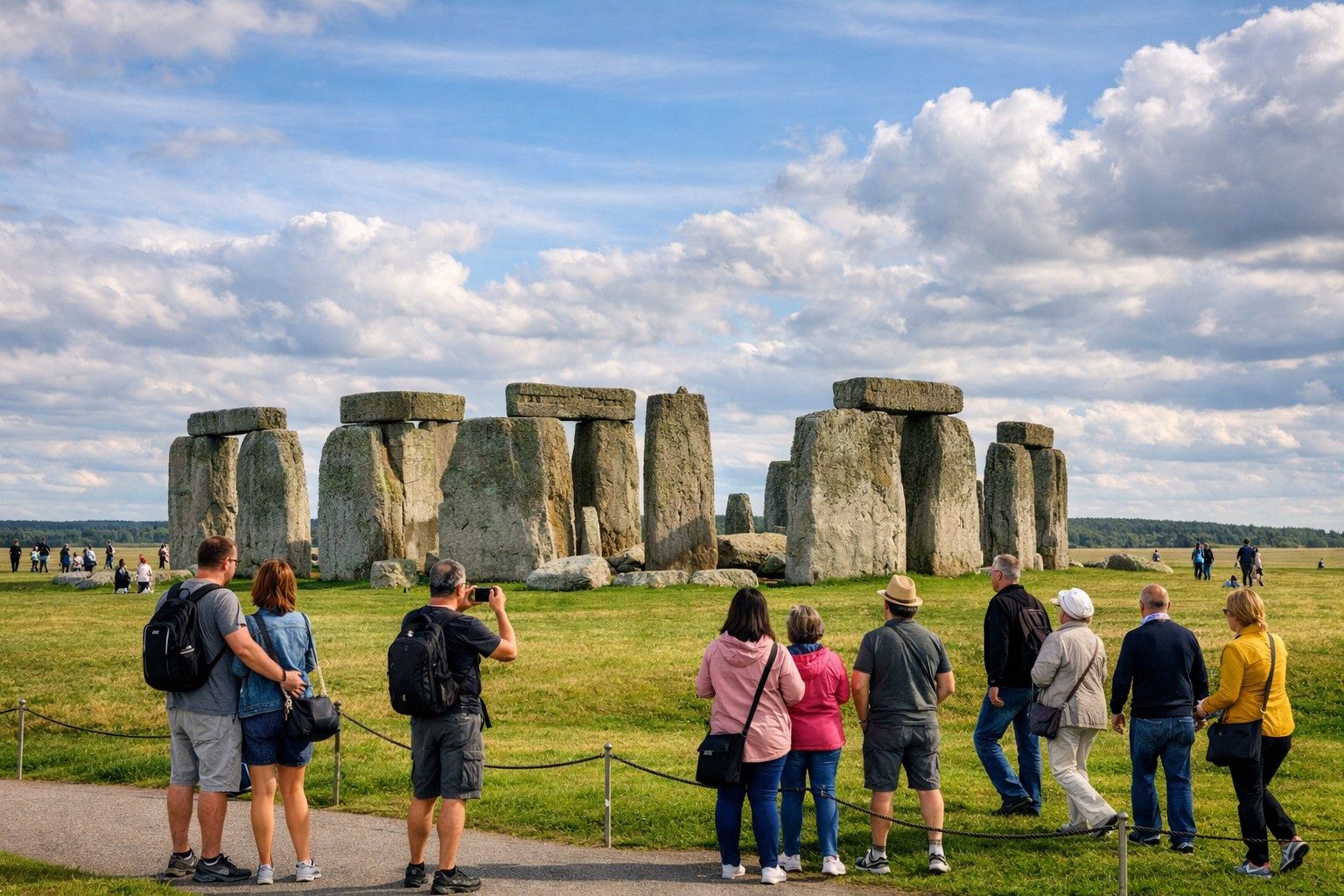
You bypass the ticket queue and board the shuttle directly, a five-minute ride that deposits you 200 metres from the sarsen circle. The stones appear smaller than expected at first approach, then grow monumental as you close the distance. You follow the roped perimeter path clockwise, pausing at the southeast quadrant where the Heel Stone frames the midsummer sunrise axis. Audio guides in eight languages narrate each station; most visitors complete the circuit in 40 minutes, though you can linger at the northwest trilithons where the largest uprights—Stone 56 weighs 40 tonnes—dominate the skyline.
After circling the monument twice, you return to the visitor centre for 20 minutes in the exhibition hall. Reconstructed Neolithic houses stand outside, their wattle-and-daub walls and thatched roofs built using Bronze Age tools. The coach departs Stonehenge at 11:30, reaching London by early afternoon.
All the details about your upcoming adventure in one place
The sarsen circle at Stonehenge was quarried 25 kilometres north in the Marlborough Downs, then dragged overland to Salisbury Plain around 2500 BCE using timber sledges, ropes woven from plant fibre, and the coordinated labour of hundreds.
The smaller bluestones—each weighing up to four tonnes—were transported 240 kilometres from the Preseli Hills in Wales, a feat that required waterborne rafts along the Severn estuary and overland hauling across what is now Wiltshire. The monument's alignment with the midsummer sunrise and midwinter sunset suggests astronomical purpose, though whether it served as a temple, a burial site, or a communal gathering place remains contested among archaeologists.
Today Stonehenge stands as the most studied prehistoric monument in Britain, inscribed on the UNESCO World Heritage list in 1986 alongside Avebury and the surrounding ceremonial landscape. More than one million visitors arrive annually, most concentrated between April and September when daylight extends well into evening. The site's infrastructure was redesigned in 2013: a new visitor centre sits 2.4 kilometres west of the stones, housing 250 Neolithic artefacts recovered during excavations, including polished stone axes, antler picks, and cremated human remains carbon-dated to the monument's earliest phase. A shuttle bus ferries visitors from the exhibition hall to the stone circle itself, though the walk across chalk grassland offers a more gradual approach, the monument emerging slowly over the crest of the plain.
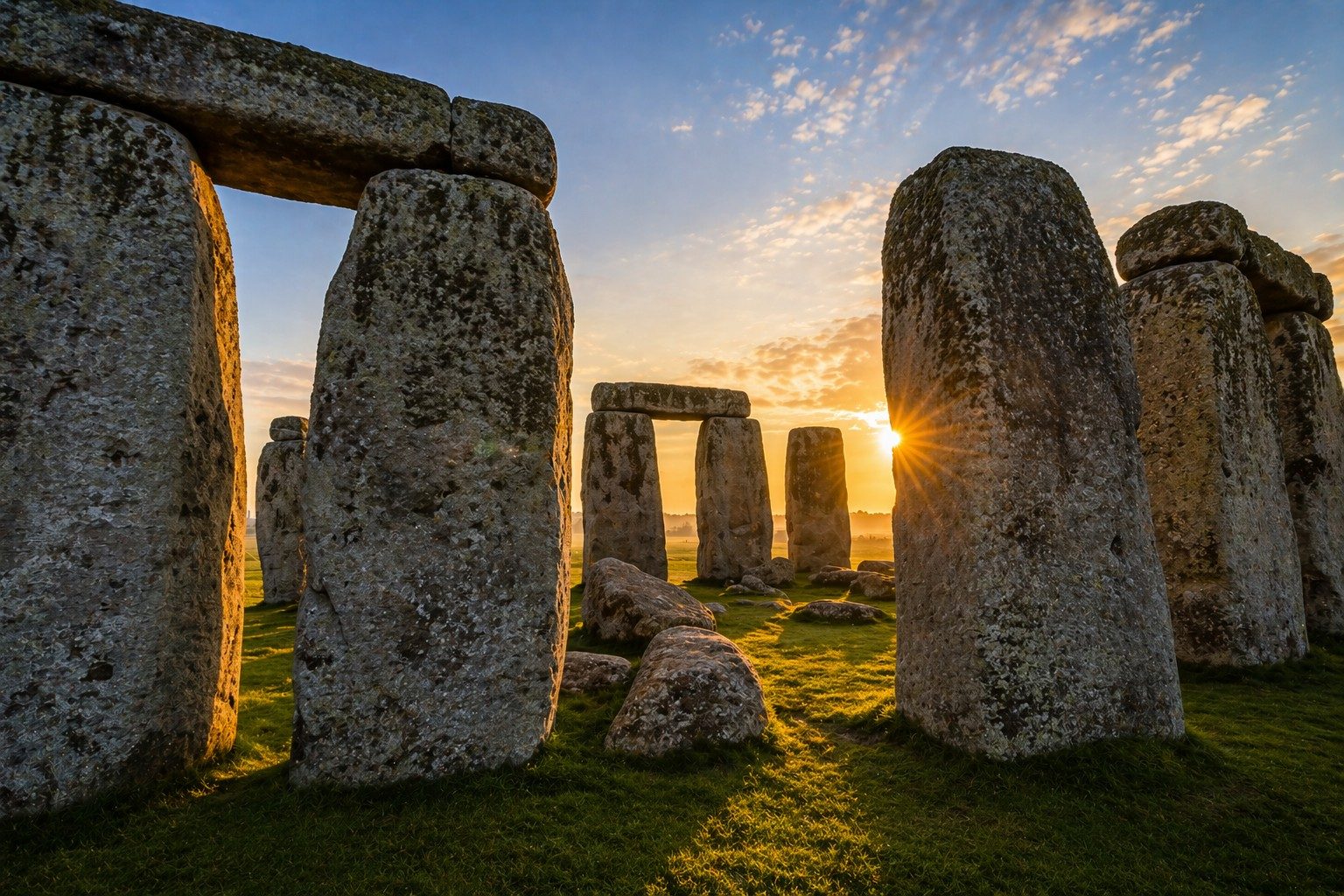
The monument's construction unfolded in stages across a millennium. The earliest earthwork—a circular ditch and bank—dates to 3000 BCE. The iconic sarsen trilithons, standing up to seven metres tall, were erected five centuries later, their surfaces dressed smooth with sarsen hammerstones and joined using mortise-and-tenon carpentry techniques typically associated with woodworking. Laser scanning completed in 2012 revealed prehistoric carvings on the inner faces of the stones: axe-heads and rectangular motifs that mirror designs found in Brittany, hinting at long-distance cultural exchange during the late Neolithic.
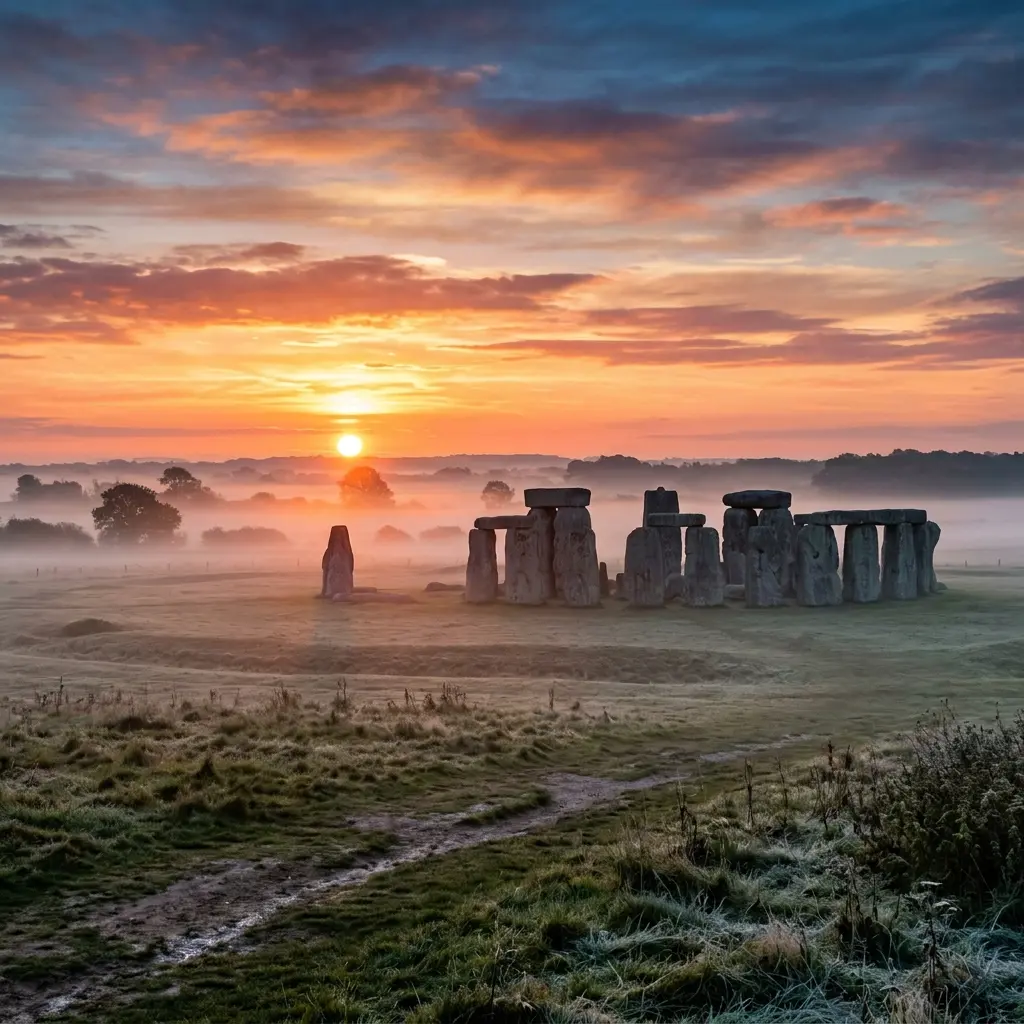
A stonehenge tour from london half day typically departs before 08:00, reaching the site by 09:30 when morning light rakes low across the sarsen uprights and coach groups remain sparse. The compact itinerary prioritises time at the monument itself—most allocations permit 90 minutes on-site—with priority entry tickets bypassing the general admission queue at the shuttle boarding point. Return journeys reach central London by early afternoon, leaving the remainder of the day open for onward plans.

The smaller bluestones were transported 240 kilometres from the Preseli Hills in Wales, a feat that required waterborne rafts along the Severn estuary.
Dress appropriately for the outdoors as the site is exposed to the elements. Ensure attire is inoffensive and avoids political slogans.
Only small bags are permitted on-site. Expect security checks at the entrance, and note that there is no luggage storage available.
Personal photography and video are permitted. Professional or commercial equipment requires prior written authorization.
Family-friendly facilities include baby-changing and food-warming areas in the visitor centre. Kids' lunch boxes with activities are available in the café.
The site provides wheelchair-accessible shuttle services to the stones. Paved paths are available and loaner wheelchairs can be requested at admissions.
Picnicking is allowed in the monument field. The on-site café offers hot and cold meals, including vegan and gluten-free options.
Opening Hours
09:30–17:00
Address
Salisbury, Wiltshire, SP4 7DE, United Kingdom
Entry Info
Shuttle to stones included
Best arrival
09:30–11:00
Storage
No facilities available
Contact
+44 370 333 1181
Public transport · 2 hours from London · Varied
Take a train to Salisbury station, then use the bus or taxi to reach Stonehenge.
Car · 2.5 hours from London · Paid parking for non-members
Follow the A303 route to the on-site car park.
All tickets include free cancellation until the day before your visit. The entrance fee is 32 GBP for a standard adult gate ticket.
Recommended time
2-3 hours
A well-planned stonehenge tour from london half day typically requires 2 to 3 hours on-site to fully explore the Neolithic exhibition, the visitor center, and the shuttle ride to the stone circle. Arriving during the best arrival window of 09:30–11:00 is essential to avoid the peak crowds that gather by midday. Opting for these stonehenge tour from london half day tours allows you to manage your time efficiently, though you should factor in extra time if you intend to browse the gift shop or linger at the prehistoric monument. For those securing stonehenge tour from london half day tickets independently, this duration remains sufficient for a comprehensive experience of this UNESCO world heritage site.
Crowd levels through the day
Weather · crowds · average price — dots go green to amber to red as each metric rises.
Mild weather and blooming landscape, though busy on bank holidays. Best for photography.
Longest days and warm weather, but the busiest season for visitors.
Lower crowds and softer light, making for a calmer experience across the plains.
Cold and quiet, offering a unique, dramatic perspective of the monument.
Reserve your time slot online before midnight the day prior to save money. This ensures entry as walk-up tickets are limited.
Arrive between 09:30–11:00 to avoid the heavy coach crowds that peak by midday.
The shuttle is included in your ticket price and saves a long walk to the stone circle.
The site is very exposed; bring layers and waterproofs regardless of the season.
If your schedule allows, a late afternoon visit after 15:00 can also offer a quieter atmosphere.
The earliest phase of Stonehenge began around 3000 BCE as a simple earthwork enclosure. Neolithic communities dug a circular ditch and bank, creating a henge monument that served as a boundary for ritual activity. Within this perimeter, they placed the Aubrey Holes, a ring of 56 pits that may have held timber posts or cremated remains. This first structure predates the iconic stones by centuries and reveals a society already organizing collective labor around a sacred site. The monument's alignment toward the midsummer sunrise likely existed from this foundational stage, anchoring ceremonies to the solar calendar. Around 2500 BCE, the Beaker people transported bluestones from the Preseli Hills in Wales, a distance of roughly 240 kilometers. Each stone weighed up to four tons, and their arrival marked the monument's transformation into a stone circle. Archaeological evidence shows that these bluestones were arranged and rearranged multiple times, suggesting evolving ritual purposes. The half-day stonehenge tour from london half day typically highlights this Welsh connection, underscoring the extraordinary effort required to move stones across land and water without wheels or draft animals. The bluestone phase coincided with the appearance of new pottery styles and burial practices, indicating cultural exchange across Britain. The final major construction occurred around 2400 BCE, when sarsen stones from the Marlborough Downs were erected in the familiar horseshoe and outer circle. These massive blocks, some weighing 25 tons, were shaped with stone hammers and linked by mortise-and-tenon joints, demonstrating advanced carpentry techniques translated into stone. The lintels atop the sarsens create a continuous horizontal plane, a feature unique among British prehistoric monuments. By 1600 BCE, construction had ceased, and the site began its long decline. Visitors on a stonehenge tour from london half day tours encounter this Bronze Age monument frozen in its final form, though centuries of weathering and stone removal have altered the original configuration. The medieval period saw Stonehenge fade into folklore, with local legend attributing the stones to Merlin or giants. Excavations in the 20th century revealed cremation deposits, antler picks, and evidence of long-distance trade, confirming Stonehenge as a burial ground and ceremonial center. Today's visitor center, opened in 2013, displays these artifacts alongside reconstructions of Neolithic life, contextualizing the monument within the broader landscape of barrows and processional avenues that once surrounded it.
Neolithic communities construct a circular earthwork ditch and bank, establishing the earliest phase of Stonehenge.
Bluestones from the Preseli Hills in Wales are transported to the site and arranged in a double circle.
Massive sarsen stones from the Marlborough Downs are erected, forming the iconic trilithon horseshoe and outer circle.
Construction activity ceases, and the monument begins its gradual decline as a living ritual center.
Stonehenge enters folklore, with legends attributing its construction to Merlin or supernatural forces.
William Gowland conducts the first systematic excavation, revealing evidence of stone shaping and Bronze Age tools.
William Hawley excavates the Aubrey Holes, uncovering cremation deposits and challenging earlier interpretations.
A new visitor center opens two kilometers from the stones, relocating facilities and restoring views of the monument.
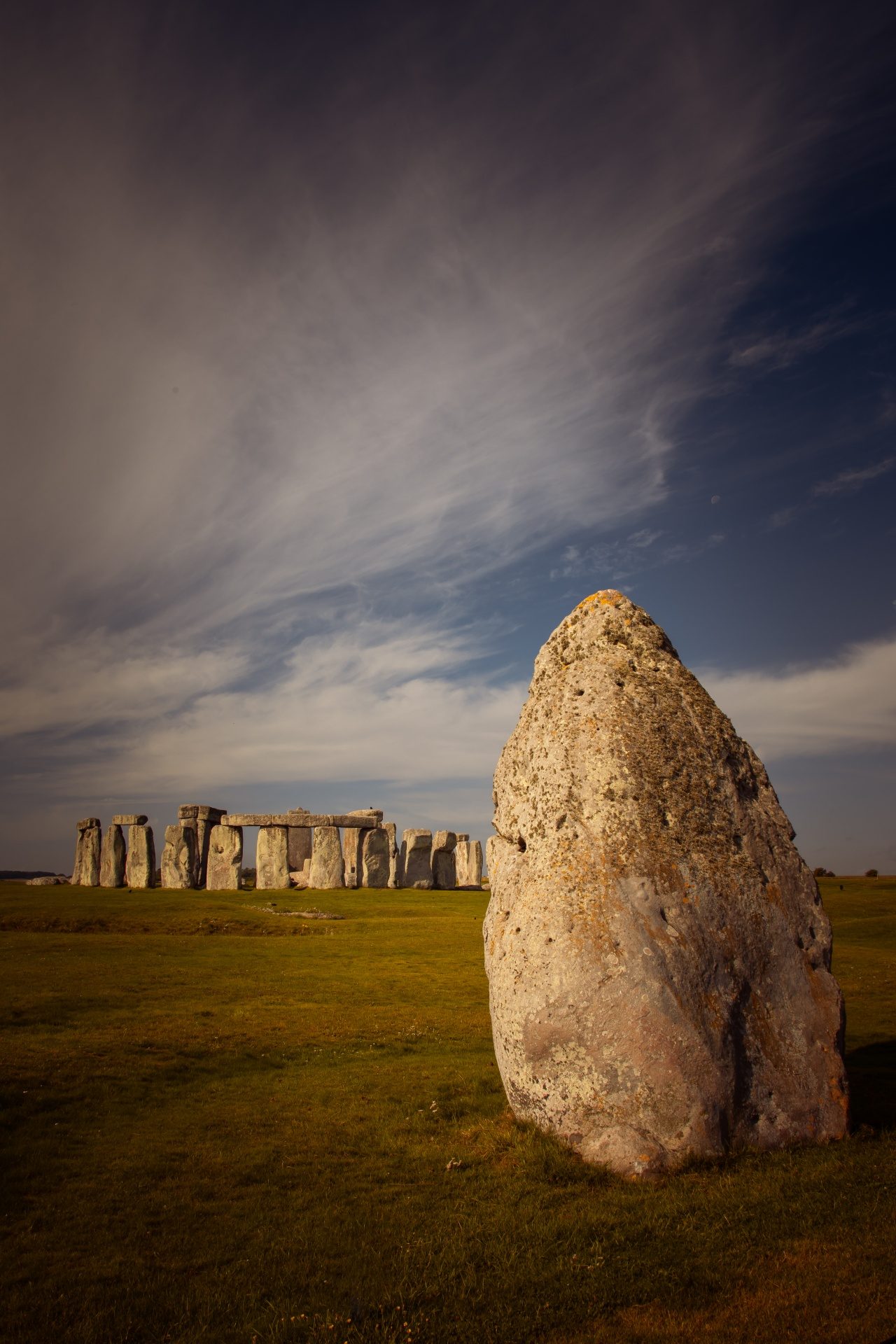
Position yourself on the eastern edge of the main path for a clear shot of the monolith framed by the rising sun. This angle is essential for those on a stonehenge tour from london half day who want the classic wide-angle perspective.
Walk along the designated circular walkway to capture the megalithic lintels against the open Salisbury Plain landscape. This route offers multiple vantage points as you rotate around the monument.
Capture the Neolithic site from the perspective of the approach shuttle as it rounds the final bend. This low-angle vantage allows you to include the surrounding landscape before arriving at the stonehenge tour from london half day tour drop-off point.
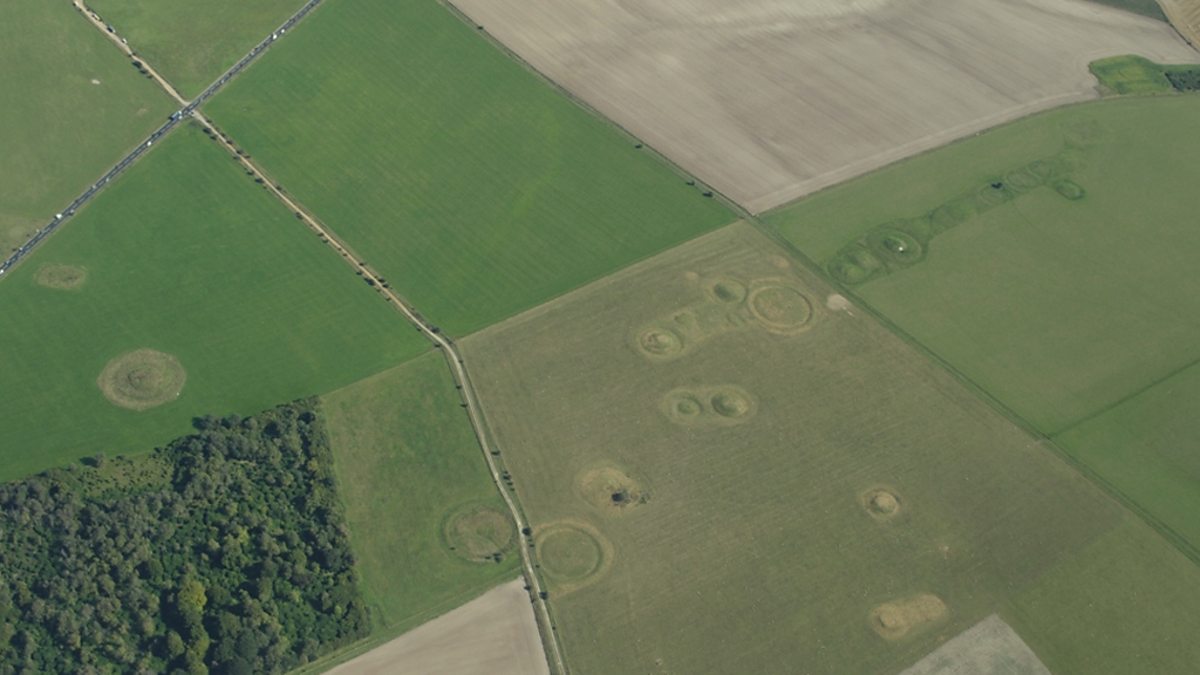
Locate these ancient burial mounds to the south for a composition that includes the historic landscape in the foreground with the stonehenge tour from london half day tickets providing access to the wider heritage site.
Planning a stonehenge tour from london half day is a great way to introduce children to ancient history through engaging, interactive exhibits and open-air exploration. With accessible facilities and a convenient shuttle, this iconic landmark remains a manageable and educational destination for families.
The site is pushchair-friendly, with smooth, accessible paths from the visitor centre to the stone circle. You can bring your buggy on the shuttle bus, though it is helpful to be prepared to fold it during peak times.;Facilities
Visitors planning a stonehenge tour from london half day will find limited dining directly at the Neolithic site, though the on-site café serves as the primary hub. Most travelers optimize their trip by utilizing these facilities before or after viewing the prehistoric monoliths.
Located at the visitor centre, this spot offers hot meals, sandwiches, and coffee. It serves as a practical choice for those with stonehenge tour from london half day tickets who need a quick refreshment before boarding the shuttle to the stones.;Solstice Bar & Grill
Everything you need to know for your journey
Stonehenge is open daily from 09:30 to 17:00. This timing allows for a comfortable stonehenge tour from london half day experience.
Yes, last admission takes place two hours before the 17:00 closing time.
Yes, only small bags are permitted on-site, and there are no left luggage facilities at the venue.
Yes, personal photography is permitted. Please be respectful of other visitors and do not use commercial equipment.
Arriving between 09:30–11:00 is recommended to avoid the busiest crowds of the day.
Yes, visitors may bring their own food and non-alcoholic drinks to consume in designated areas.
Most visitors take a train from London to Salisbury and then a connecting shuttle, or drive via the A303.
Yes, Stonehenge is a family-friendly destination and children are welcome.
Tickets are free to cancel until the day before your visit. You should check your specific tour operator's terms for group bookings.
Yes, visitors often combine their trip with nearby historical landmarks like Old Sarum or the city of Salisbury.
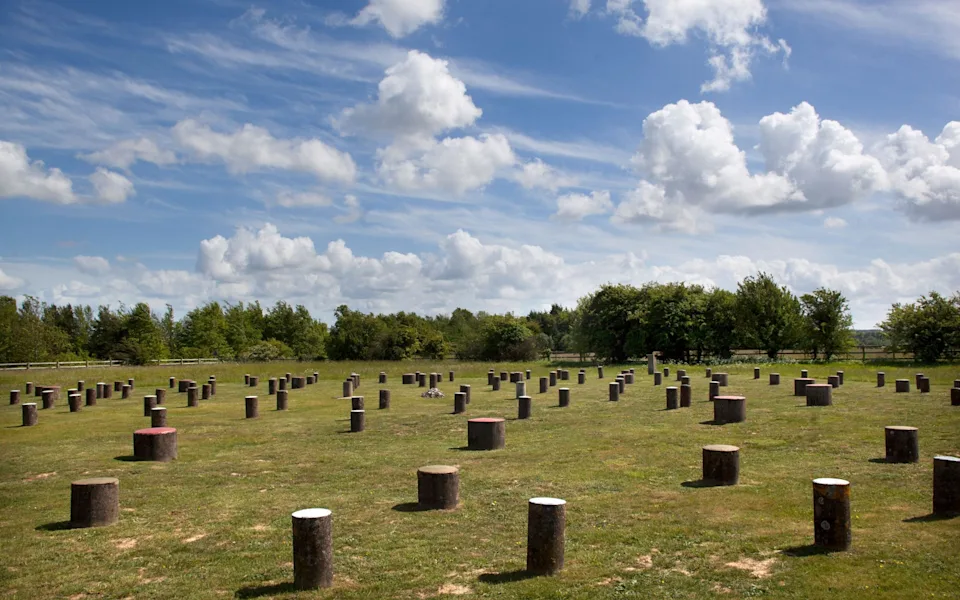
A Neolithic timber circle site nearby. It offers a fascinating glimpse into the landscape's prehistoric past.
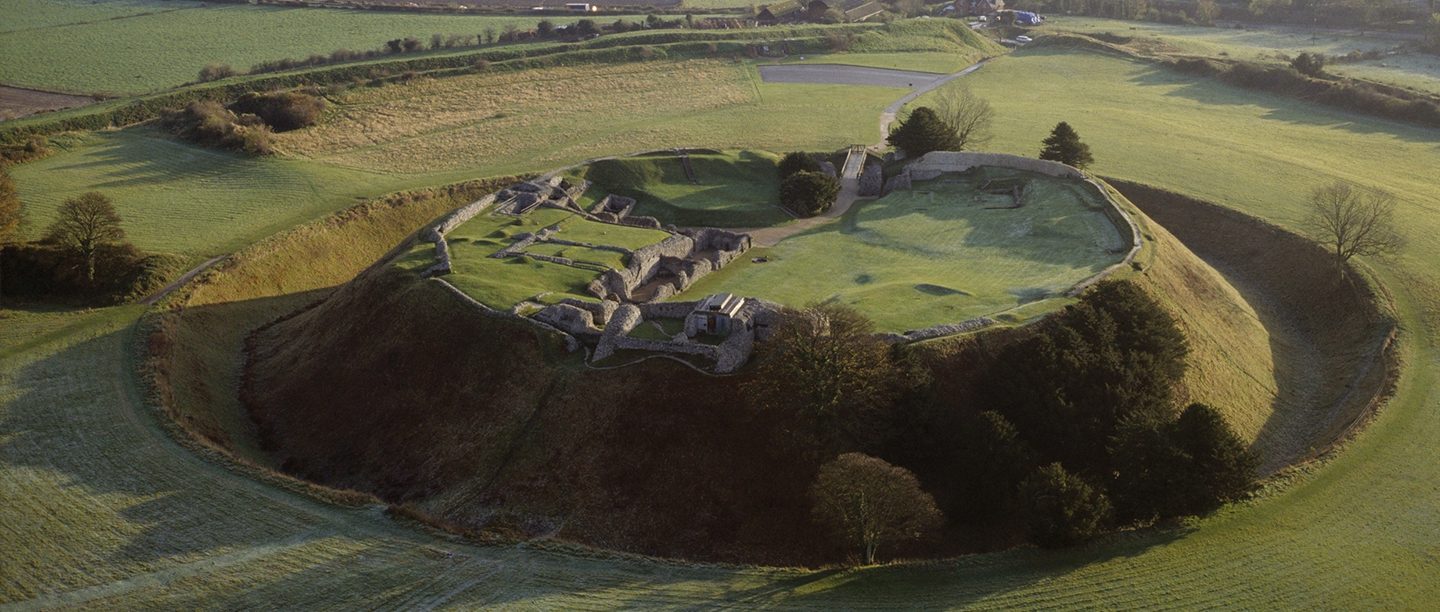
An Iron Age hillfort and medieval castle site. It provides historic ruins and extensive views.
Convenient access to the monument via local roads.
Historic city centre with many lodging options.
Join thousands of happy travelers who have discovered this incredible experience
Book Your Experience Now